
Suit of Swords Tarot Cards
The Suit of Swords reflects the realm of intellect, communication, truth, critical thought, moral integrity, and tough decisions. Governed by the element of Air, Swords cut through illusions and expose cold realities—challenging us to balance reason with compassion.
The Air Element
Air governs the mind, ideas, logic, and verbal expression. In tarot, Swords reveal our mental narratives, belief systems, and the power of truth to dissolve confusion.
Truth & Difficult Choices
From the decisive breakthrough of the Ace of Swords to the restful truce of the Four of Swords, this suit invites mental courage and objective clarity.
Swords Court Cards
The Page, Knight, Queen, and King of Swords demonstrate intellectual rigor, sharp wit, honest discourse, and wise judicial discernment.
All 14 Suit of Swords Cards
Click any card to examine upright, reversed, decision, and mental interpretations.
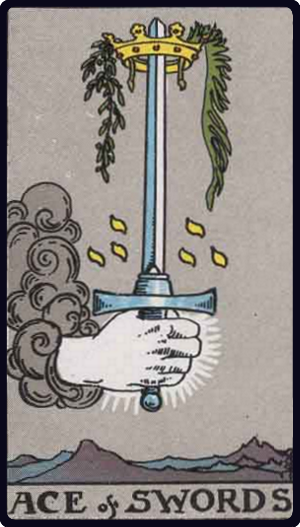
Ace of Swords
The Ace of Swords represents a sudden breakthrough of mental clarity, intellectual precision, and unvarnished truth. Like a double-edged blade, it cuts through ambiguity, confusion, and deceptive illusions to reveal what is real. It brings the power of rational insight and the courage to articulate convictions clearly.
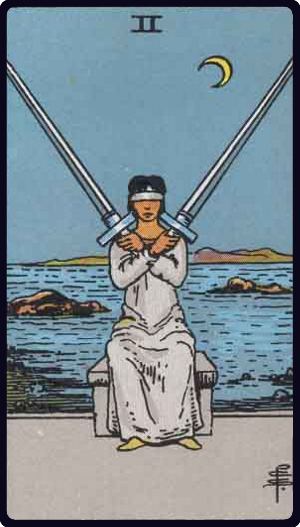
Two of Swords
The Two of Swords depicts a state of intellectual stalemate and defensive standoff, where a difficult choice is avoided. Blindfolded and holding two crossed swords, the figure blocks out external stimuli to maintain a fragile equilibrium. It reminds us that while pausing to deliberate is wise, refusing to choose is itself a consequential decision.
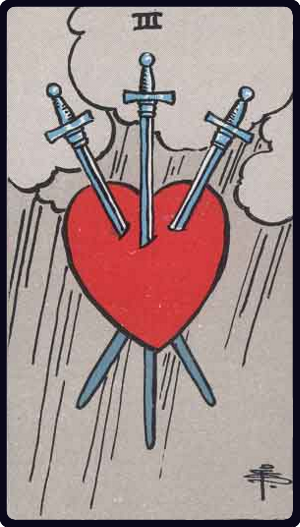
Three of Swords
The Three of Swords is the quintessential card of heartbreak, sorrow, and piercing emotional pain. It shows a heart pierced by three swords beneath weeping storm clouds, symbolizing the sharp sting of painful realizations, betrayal, or separation. It teaches that grief is a natural, necessary part of the human journey that must be felt to be healed.
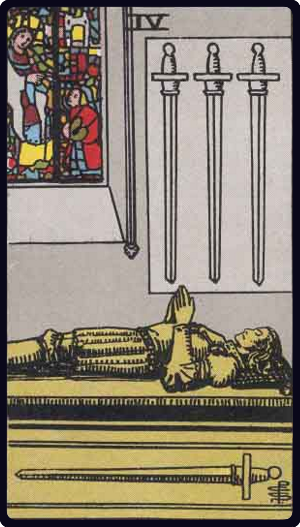
Four of Swords
The Four of Swords calls for a deliberate pause, rest, and mental recuperation after an arduous battle or stressful ordeal. Depicting a knight lying in repose within a quiet sanctuary, it highlights the necessity of stepping away from the noise to restore cognitive energy. True mental sharpness cannot be sustained without periodic, protected retreat.
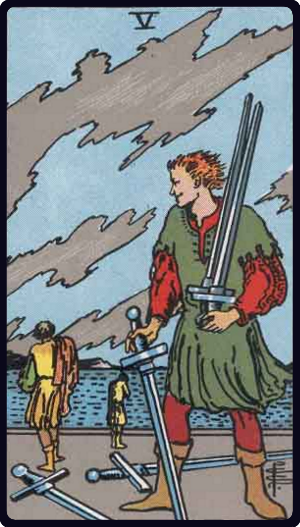
Five of Swords
The Five of Swords depicts a hollow victory won through ruthless tactics, deceit, or pride, leaving lingering bitterness in its wake. While one figure smirks holding captured swords, the defeated walk away in shame. It poses a crucial ethical question: what is the true cost of being 'right' if you destroy trust, relationships, and goodwill in the process?
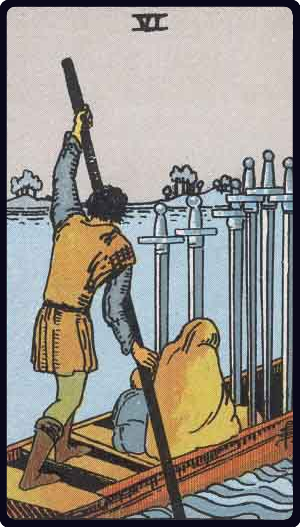
Six of Swords
The Six of Swords represents a transition away from turbulence toward calmer, more peaceful waters. A ferryman navigates a quiet boat carrying passengers away from a rough shore toward a serene horizon. Though the journey may be somber and the baggage heavy, it offers profound relief and the promise of gradual healing.
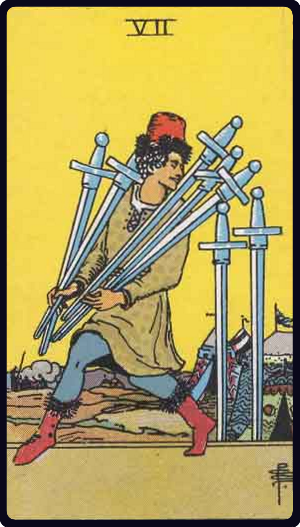
Seven of Swords
The Seven of Swords represents tactical maneuvers, stealth, strategy, and discretion. Depicting a figure slipping away from a military camp with five swords while leaving two behind, it suggests working behind the scenes or avoiding direct confrontation. It prompts reflection on whether your approach is clever diplomacy or questionable evasiveness.
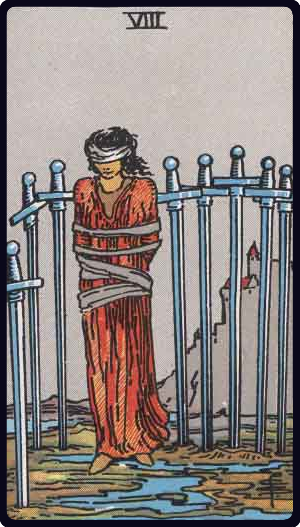
Eight of Swords
The Eight of Swords represents feelings of being trapped, helpless, and paralyzed by limiting beliefs. A woman stands blindfolded and loosely bound, encircled by a cage of swords in muddy water. Yet the bindings are loose and the swords do not touch her—the primary prison is formed by her own fears and cognitive assumptions.
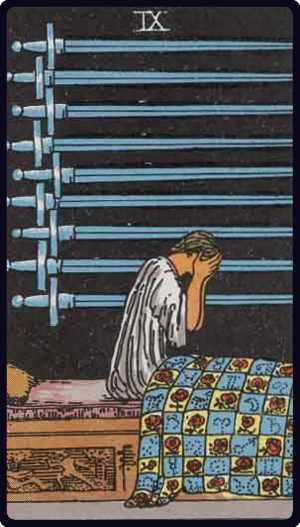
Nine of Swords
The Nine of Swords is known as the card of anguish, sleepless nights, and mental torment. A figure sits upright in bed, weeping with head in hands beneath nine swords mounted against a black wall. It reflects the agony of worst-case scenarios, guilt, and racing thoughts that feel magnified in the dark of night.
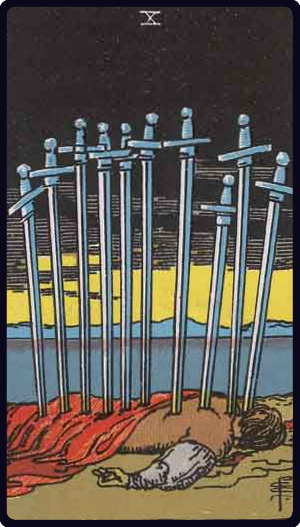
Ten of Swords
The Ten of Swords depicts rock bottom, a dramatic and painful ending, or an inescapable defeat. A figure lies face down with ten swords in their back beneath a black sky. While intense, it carries a profound hidden mercy: the ordeal is completely over, the swords cannot hurt any further, and a golden dawn is already breaking on the horizon.
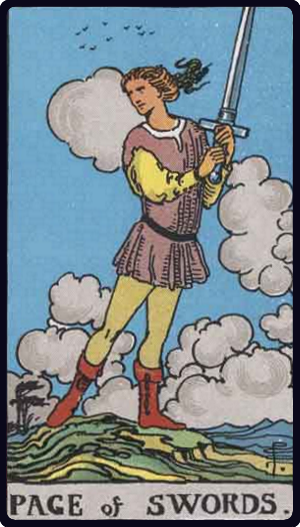
Page of Swords
The Page of Swords represents an inquisitive, sharp, and alert intellect eager to uncover the truth and learn how the world works. Ready for intellectual challenges, this figure stands watch with weapon raised, testing ideas against reality. It symbolizes youthful curiosity, sharp mental reflexes, and refreshing candor.
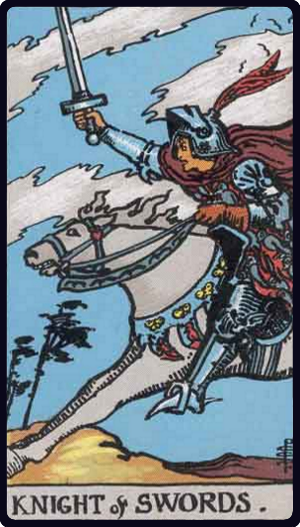
Knight of Swords
The Knight of Swords charges forward with fierce intellectual intensity, razor-sharp focus, and absolute determination. Nothing deters this knight from their mission; obstacles are severed and hesitation is eliminated. It represents swift action, championing causes with fiery logic, and fearlessly pursuing objectives.
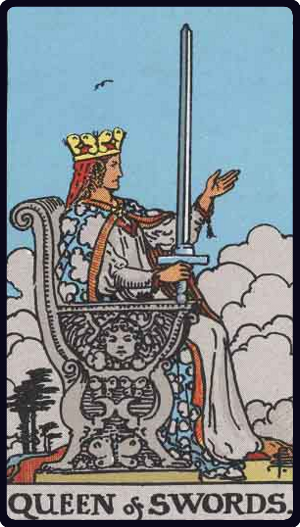
Queen of Swords
The Queen of Swords combines intellectual brilliance, fierce independence, and clear discernment with deep, hard-won life experience. Seated high above the clouds, she extends a welcoming hand while holding an upright blade, offering fair judgment without sentimental illusions. She represents clear boundaries, direct truth, and honest insight.
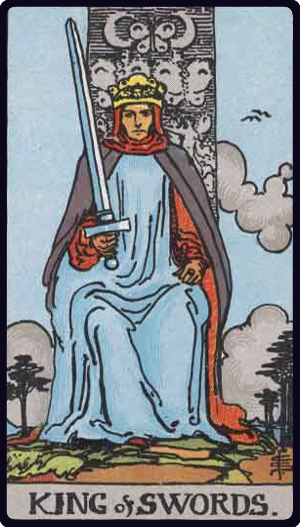
King of Swords
The King of Swords represents the highest mastery of intellect, reason, and ethical authority. Seated squarely on his throne, he governs with impartial fairness, strategic brilliance, and unwavering commitment to truth and law. He cuts through emotional drama to deliver balanced, just decisions that stand up to the strictest scrutiny.
Need Decisive Clarity on a Dilemma?
When facing a difficult crossroads, our Yes or No Tarot Oracle provides rapid perspective, helping you cut through indecision and understand underlying factors.